Unlikely
Best chance in Pacific Northwest: Glasgow
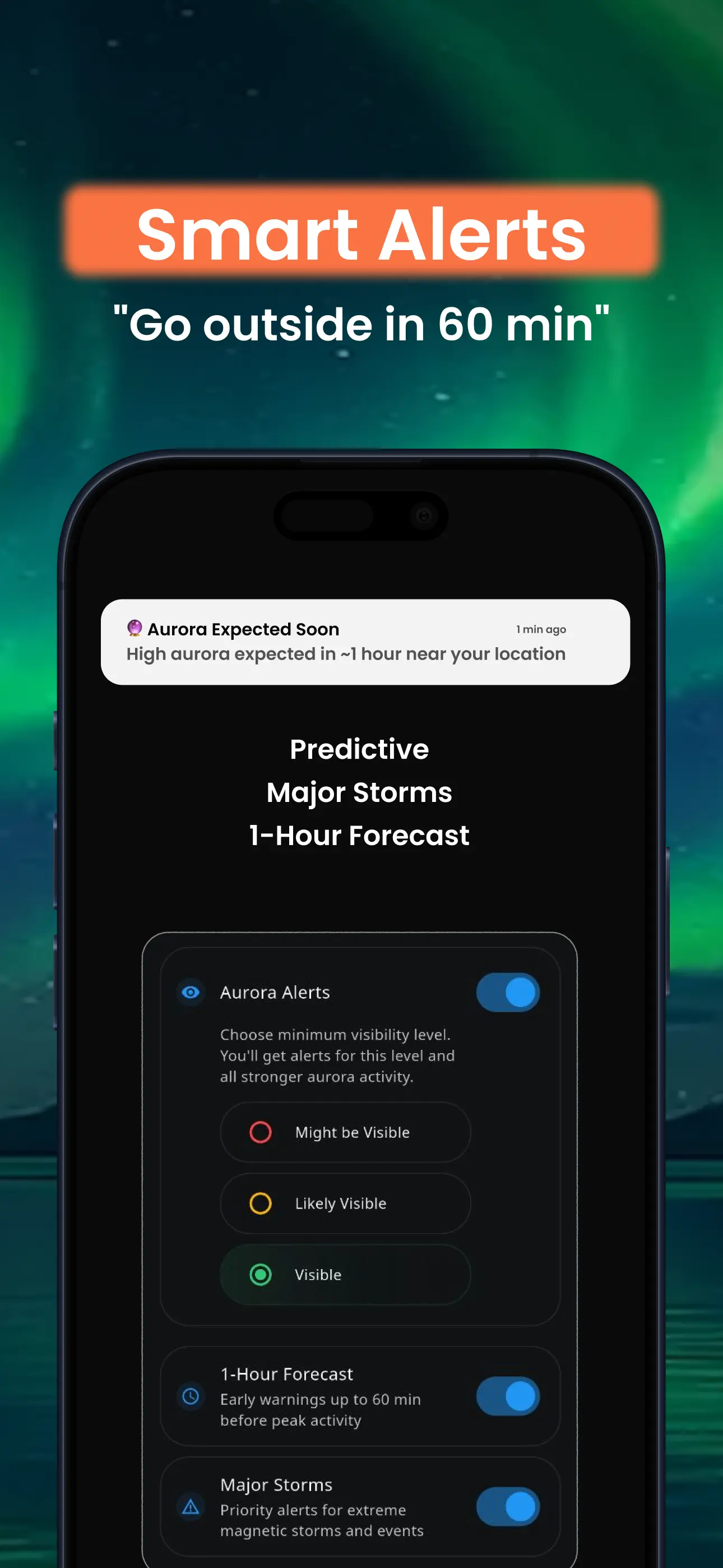
Free push alerts built on NOAA space weather data, plus the 72-hour forecast, cloud cover and darkness window for Glasgow.
Northern lights in the Pacific Northwest region are possible but uncommon: they need a Kp of 6 or more to reach this far south. AuroraMe tracks 23 locations across the Pacific Northwest region; 7 of them need only Kp 6, led by Havre.
Cities Covered
23
Monitoring locations across Pacific Northwest
Magnetic Latitude Range
47.8°–55.6° MLAT
Prime aurora viewing latitudes
Required Kp Index
Kp 6.0–9.0
Minimum activity for visibility
Kp Requirements by Location
Glasgow
55.6° MLAT
Required Kp Levels
Kp 6.0+ Horizon
Kp 7.0+ Optimal
Kp 8.0+ Bright
Kp0Kp1Kp2Kp3Kp4Kp5Kp6Kp7Kp8Kp9
Visible on horizon
Clearly visible
Bright overhead
Great Falls
54.4° MLAT
Required Kp Levels
Kp 6.0+ Horizon
Kp 7.0+ Optimal
Kp 8.0+ Bright
Kp0Kp1Kp2Kp3Kp4Kp5Kp6Kp7Kp8Kp9
Visible on horizon
Clearly visible
Bright overhead
Bellingham
54.2° MLAT
Required Kp Levels
Kp 6.0+ Horizon
Kp 7.0+ Optimal
Kp 8.0+ Bright
Kp0Kp1Kp2Kp3Kp4Kp5Kp6Kp7Kp8Kp9
Visible on horizon
Clearly visible
Bright overhead
Spokane
53.8° MLAT
Required Kp Levels
Kp 7.0+ Horizon
Kp 8.0+ Optimal
Kp 9.0+ Bright
Kp0Kp1Kp2Kp3Kp4Kp5Kp6Kp7Kp8Kp9
Visible on horizon
Clearly visible
Bright overhead
Missoula
53.5° MLAT
Required Kp Levels
Kp 7.0+ Horizon
Kp 8.0+ Optimal
Kp 9.0+ Bright
Kp0Kp1Kp2Kp3Kp4Kp5Kp6Kp7Kp8Kp9
Visible on horizon
Clearly visible
Bright overhead
Helena
53.4° MLAT
Required Kp Levels
Kp 7.0+ Horizon
Kp 8.0+ Optimal
Kp 9.0+ Bright
Kp0Kp1Kp2Kp3Kp4Kp5Kp6Kp7Kp8Kp9
Visible on horizon
Clearly visible
Bright overhead
Visible on horizon
Clearly visible
Bright overhead
Best Dark Sky Viewing Locations
Interactive map showing dark sky preserves and Bortle class sites in Pacific Northwest. Click markers for details and directions.
Bortle 1
Oregon Star Party Site
Renowned astronomy gathering site
200mi from portland50mi from bend
Ochoco National Forest roads
Aurora Status by City
Glasgow
Favorable position at 55.6° magnetic latitude for aurora watching. Geomagnetic storms bring vivid displays, and dark skies with clear weather maximize visibility.
CURRENT STATUS
Unlikely
View
Great Falls
Aurora possible at 54.4° magnetic latitude during active periods. KP 5+ required for visibility. Strong storms can bring impressive displays.
CURRENT STATUS
Unlikely
View
Bellingham
Aurora possible at 54.2° magnetic latitude during active periods. KP 5+ required for visibility. Strong storms can bring impressive displays.
CURRENT STATUS
Unlikely
View
Spokane
Moderate aurora potential at 53.8° magnetic latitude. Northern lights appear during stronger storms when KP reaches 5+. Best chances in winter months.
CURRENT STATUS
Unlikely
View
Missoula
Located at 53.5° MLAT with decent aurora opportunities. Geomagnetic storms with KP 5+ can produce visible displays. Monitor forecasts for storm alerts.
CURRENT STATUS
Unlikely
View
Helena
Moderate aurora potential at 53.4° magnetic latitude. Northern lights appear during stronger storms when KP reaches 5+. Best chances in winter months.
CURRENT STATUS
Unlikely
View
Seattle
Located at 53.1° MLAT with decent aurora opportunities. Geomagnetic storms with KP 5+ can produce visible displays. Monitor forecasts for storm alerts.
CURRENT STATUS
Unlikely
View
Billings
Moderate aurora potential at 53.0° magnetic latitude. Northern lights appear during stronger storms when KP reaches 5+. Best chances in winter months.
CURRENT STATUS
Unlikely
View
Bozeman
Located at 52.6° MLAT with decent aurora opportunities. Geomagnetic storms with KP 5+ can produce visible displays. Monitor forecasts for storm alerts.
CURRENT STATUS
Unlikely
View
Yakima
Moderate aurora potential at 52.4° magnetic latitude. Northern lights appear during stronger storms when KP reaches 5+. Best chances in winter months.
CURRENT STATUS
Unlikely
View
Portland
Located at 51.0° MLAT with decent aurora opportunities. Geomagnetic storms with KP 6+ can produce visible displays. Monitor forecasts for storm alerts.
CURRENT STATUS
Unlikely
View
Idaho Falls
Moderate aurora potential at 50.3° magnetic latitude. Northern lights appear during stronger storms when KP reaches 6+. Best chances in winter months.
CURRENT STATUS
Unlikely
View
Best Viewing Season in Pacific Northwest
Great Falls averages 2.1 clear nights a year with Kp at its threshold — aurora here is an event, not a season. Figures below are for Great Falls, the best-placed of the 23 locations we track in Pacific Northwest. They describe a typical year built from the 1996-2026 planetary Kp record and the 2001-2020 cloud normal — not a forecast. Each city page shows tonight's live cloud, moon and darkness instead.
Geographic Advantages
Magnetic Latitude 47.8°–55.6° MLAT
Cities Covered 23 locations
Winter Darkness 11.8 h in December
Dark Sky Sites 1 Bortle 1-3
Peak Aurora Months
Primary Peak September — 0.38 clear nights
Secondary Peak October — 0.30 clear nights
Third Best November — 0.28 clear nights
Clear Nights a Year 2.1 a year
Kp Needed Kp 6-9
Track with AuroraMe
Coverage All 23 cities
Advance Notice 30 minutes
Weather Integration Cloud cover
Predictions Best viewing times
Frequently Asked Questions
Can you see the northern lights in Pacific Northwest?
Yes, Pacific Northwest region offers aurora viewing opportunities. Cities like Havre (MLAT 55.6°) can see aurora at Kp 6.0+, while southern locations need Kp 9.0+. Best viewing is September–April during dark, clear nights.
Where are the darkest skies in Pacific Northwest?
The darkest locations include Oregon Star Party Site with Bortle class 1–1. These sites offer minimal light pollution for optimal aurora photography.