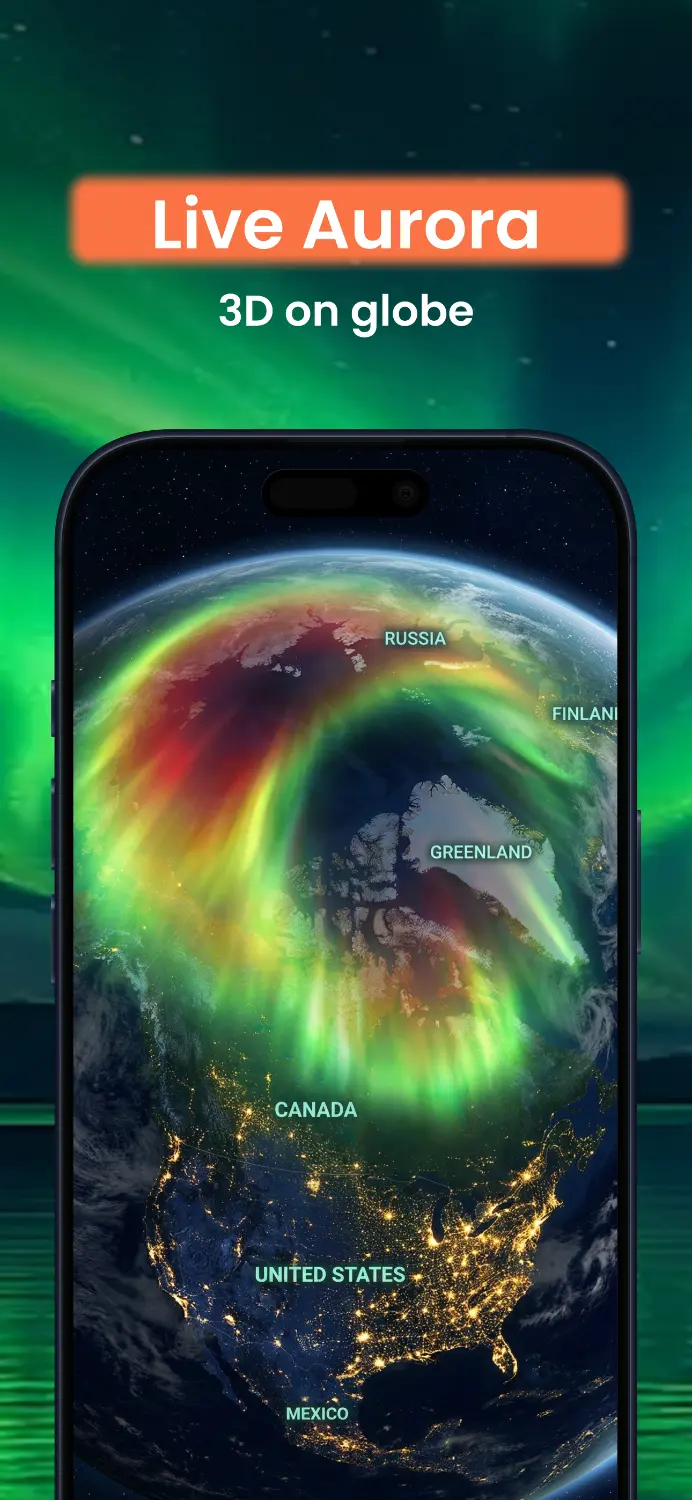
KP Threshold & Odds
Kp 6+ minimum
Magnetic latitude: 56.2°
Low Kp can be enough here. Clear skies matter most.
Good aurora viewing location at 59.0° magnetic latitude. Northern lights appear regularly when KP index reaches 3+ during geomagnetic storms.
Kp 6+ minimum
Magnetic latitude: 56.2°
Low Kp can be enough here. Clear skies matter most.
Higher odds to the north of New Stuyahok.
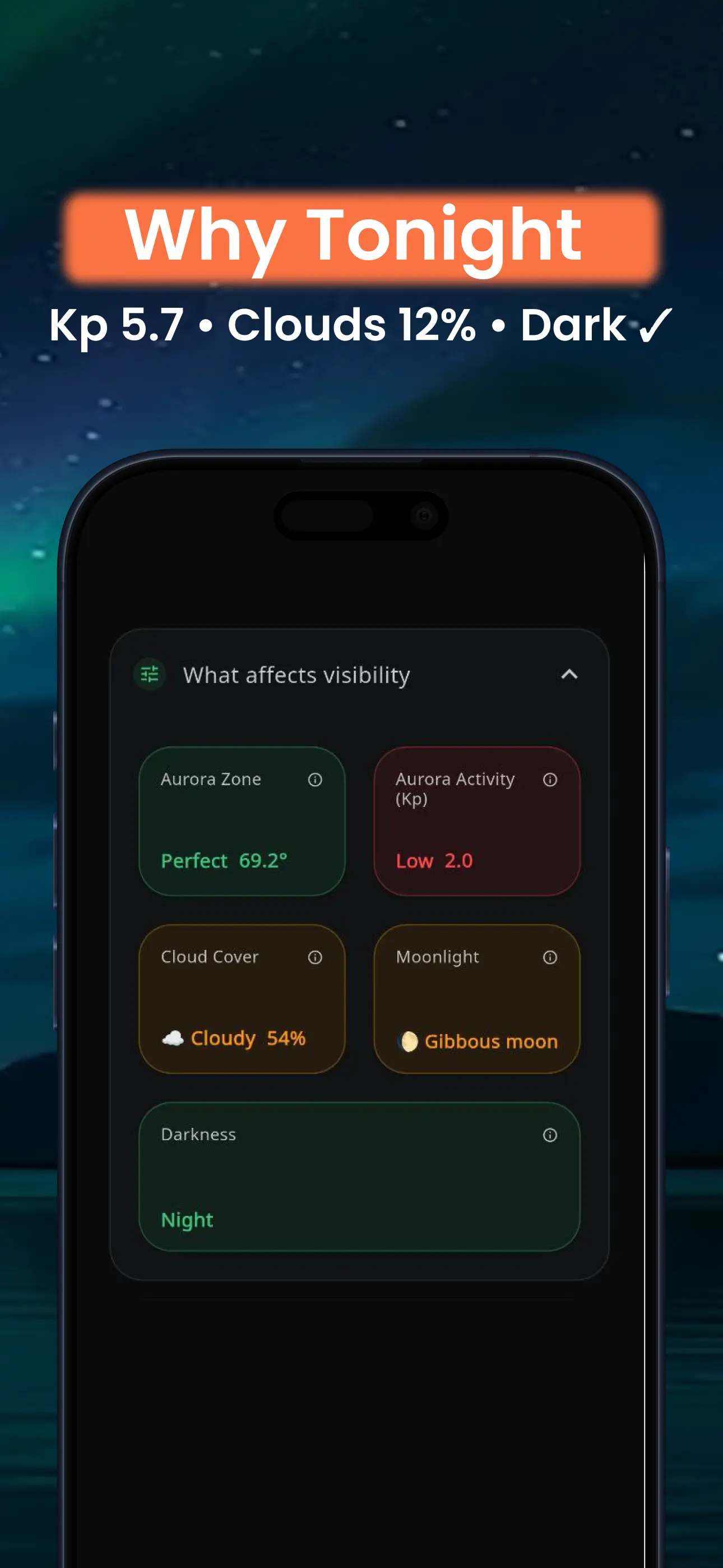
Higher magnetic latitude = better aurora visibility. Your location's magnetic latitude determines how often auroras appear overhead.
Kp measures global magnetic disturbance. Higher Kp = stronger auroras visible at lower latitudes.
Clear skies are essential for aurora viewing. Clouds block your view of the northern lights. The percentage shows cloud coverage (0% = clear skies, 100% = overcast).
Bright moonlight can wash out faint auroras. New moon provides the darkest skies for optimal viewing.
Darker skies are essential for aurora viewing. The sun must be below the horizon for auroras to be visible.
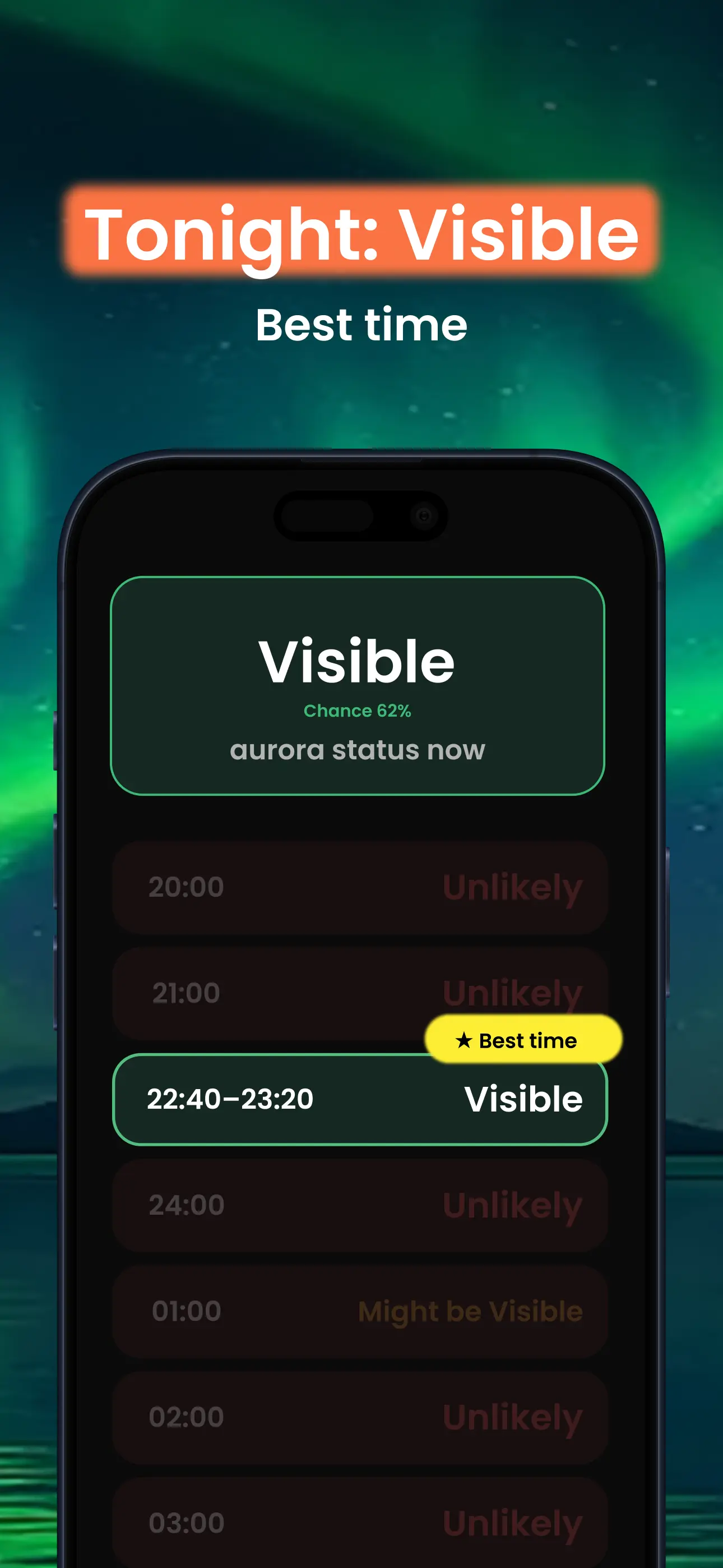
3-day precision forecast — know the best hour
This calendar shows likelihood trends based on aurora activity, darkness, aurora zone, moonlight, and historical data. Clouds are excluded due to low predictability. Use it to pick promising nights, then confirm with the 72h forecast closer to date.
This calendar shows how often aurora was observed here by week across the year. Colors reflect historical intensity: greener months had more aurora nights, grey had little or none. Use it to plan trips around the strongest months, then confirm exact nights with the 72h forecast.
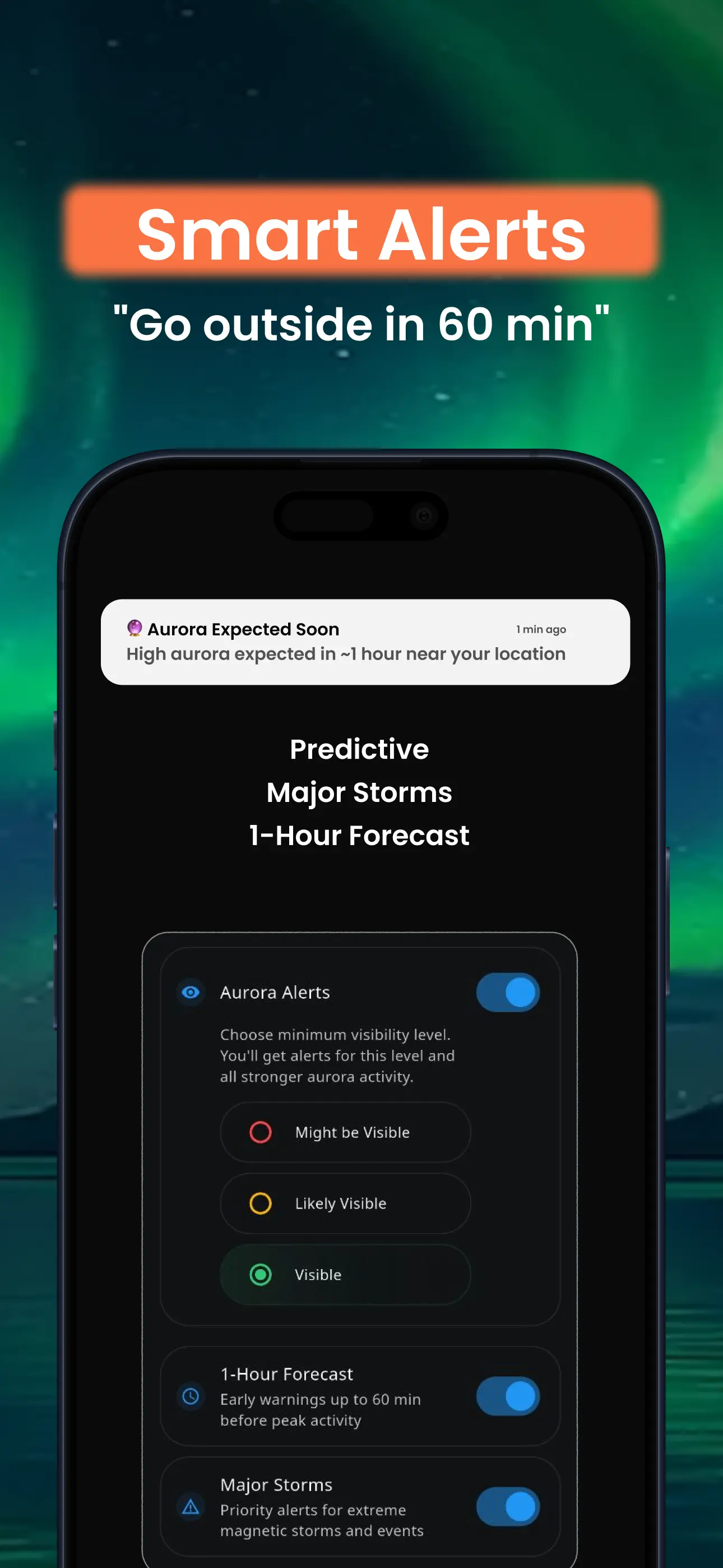
Push alerts 20–90 min before northern lights. 72h forecast, cloud cover, 11 years of historical data.


Located in the heart of the auroral oval at 71.1° MLAT. One of the best locations in the USA for regular northern lights displays. Clear skies are the main limiting factor.
Exceptional aurora viewing destination at 70.0° magnetic latitude. The low KP 0+ threshold means you'll see northern lights on most active nights with clear weather.
Located in the heart of the auroral oval at 70.0° MLAT. One of the best locations in the USA for regular northern lights displays. Clear skies are the main limiting factor.
Prime aurora zone at 69.2° magnetic latitude. Northern lights visible most clear nights during active solar periods. Low KP threshold means frequent viewing opportunities.
Prime aurora zone at 69.0° magnetic latitude. Northern lights visible most clear nights during active solar periods. Low KP threshold means frequent viewing opportunities.
Prime aurora zone at 68.0° magnetic latitude. Northern lights visible most clear nights during active solar periods. Low KP threshold means frequent viewing opportunities.
Exceptional aurora viewing destination at 67.9° magnetic latitude. The low KP 0+ threshold means you'll see northern lights on most active nights with clear weather.
Exceptional aurora viewing destination at 67.8° magnetic latitude. The low KP 0+ threshold means you'll see northern lights on most active nights with clear weather.
Located in the heart of the auroral oval at 67.7° MLAT. One of the best locations in the USA for regular northern lights displays. Clear skies are the main limiting factor.
Located in the heart of the auroral oval at 67.6° MLAT. One of the best locations in the USA for regular northern lights displays. Clear skies are the main limiting factor.
Located in the heart of the auroral oval at 67.3° MLAT. One of the best locations in the USA for regular northern lights displays. Clear skies are the main limiting factor.
Exceptional aurora viewing destination at 67.1° magnetic latitude. The low KP 0+ threshold means you'll see northern lights on most active nights with clear weather.
Exceptional aurora viewing destination at 66.9° magnetic latitude. The low KP 1+ threshold means you'll see northern lights on most active nights with clear weather.
Prime aurora zone at 66.6° magnetic latitude. Northern lights visible most clear nights during active solar periods. Low KP threshold means frequent viewing opportunities.
Located in the heart of the auroral oval at 66.5° MLAT. One of the best locations in the USA for regular northern lights displays. Clear skies are the main limiting factor.
Located in the heart of the auroral oval at 66.4° MLAT. One of the best locations in the USA for regular northern lights displays. Clear skies are the main limiting factor.
Exceptional aurora viewing destination at 66.4° magnetic latitude. The low KP 1+ threshold means you'll see northern lights on most active nights with clear weather.
Prime aurora zone at 66.1° magnetic latitude. Northern lights visible most clear nights during active solar periods. Low KP threshold means frequent viewing opportunities.
Located in the heart of the auroral oval at 66.1° MLAT. One of the best locations in the USA for regular northern lights displays. Clear skies are the main limiting factor.
Exceptional aurora viewing destination at 66.0° magnetic latitude. The low KP 1+ threshold means you'll see northern lights on most active nights with clear weather.
Exceptional aurora viewing destination at 65.9° magnetic latitude. The low KP 1+ threshold means you'll see northern lights on most active nights with clear weather.
Located in the heart of the auroral oval at 65.9° MLAT. One of the best locations in the USA for regular northern lights displays. Clear skies are the main limiting factor.
Prime aurora zone at 65.9° magnetic latitude. Northern lights visible most clear nights during active solar periods. Low KP threshold means frequent viewing opportunities.
Exceptional aurora viewing destination at 65.8° magnetic latitude. The low KP 1+ threshold means you'll see northern lights on most active nights with clear weather.
Exceptional aurora viewing destination at 65.7° magnetic latitude. The low KP 1+ threshold means you'll see northern lights on most active nights with clear weather.
Located in the heart of the auroral oval at 65.7° MLAT. One of the best locations in the USA for regular northern lights displays. Clear skies are the main limiting factor.
Exceptional aurora viewing destination at 65.7° magnetic latitude. The low KP 1+ threshold means you'll see northern lights on most active nights with clear weather.
Prime aurora zone at 65.6° magnetic latitude. Northern lights visible most clear nights during active solar periods. Low KP threshold means frequent viewing opportunities.
Exceptional aurora viewing destination at 65.6° magnetic latitude. The low KP 1+ threshold means you'll see northern lights on most active nights with clear weather.
Prime aurora zone at 65.6° magnetic latitude. Northern lights visible most clear nights during active solar periods. Low KP threshold means frequent viewing opportunities.
Exceptional aurora viewing destination at 65.4° magnetic latitude. The low KP 1+ threshold means you'll see northern lights on most active nights with clear weather.
Exceptional aurora viewing destination at 65.3° magnetic latitude. The low KP 1+ threshold means you'll see northern lights on most active nights with clear weather.
Located in the heart of the auroral oval at 65.2° MLAT. One of the best locations in the USA for regular northern lights displays. Clear skies are the main limiting factor.
Prime aurora zone at 65.2° magnetic latitude. Northern lights visible most clear nights during active solar periods. Low KP threshold means frequent viewing opportunities.
Located in the heart of the auroral oval at 65.2° MLAT. One of the best locations in the USA for regular northern lights displays. Clear skies are the main limiting factor.
Prime aurora zone at 65.2° magnetic latitude. Northern lights visible most clear nights during active solar periods. Low KP threshold means frequent viewing opportunities.
Exceptional aurora viewing destination at 65.1° magnetic latitude. The low KP 1+ threshold means you'll see northern lights on most active nights with clear weather.
Located in the heart of the auroral oval at 65.0° MLAT. One of the best locations in the USA for regular northern lights displays. Clear skies are the main limiting factor.
Exceptional aurora viewing destination at 65.0° magnetic latitude. The low KP 1+ threshold means you'll see northern lights on most active nights with clear weather.
Located in the heart of the auroral oval at 65.0° MLAT. One of the best locations in the USA for regular northern lights displays. Clear skies are the main limiting factor.
Excellent aurora location at 64.9° magnetic latitude with KP 1+ threshold. Frequent displays during solar activity make this a premier viewing destination.
High-latitude location at 64.9° magnetic latitude. Aurora frequently visible during moderate to strong solar activity with the low KP 1+ threshold.
At 64.8° MLAT, Northway offers outstanding northern lights opportunities. Regular aurora activity during geomagnetic storms with favorable viewing conditions.
High-latitude location at 64.6° magnetic latitude. Aurora frequently visible during moderate to strong solar activity with the low KP 1+ threshold.
Excellent aurora location at 64.5° magnetic latitude with KP 1+ threshold. Frequent displays during solar activity make this a premier viewing destination.
High-latitude location at 64.4° magnetic latitude. Aurora frequently visible during moderate to strong solar activity with the low KP 1+ threshold.
Excellent aurora location at 64.3° magnetic latitude with KP 1+ threshold. Frequent displays during solar activity make this a premier viewing destination.
High-latitude location at 64.3° magnetic latitude. Aurora frequently visible during moderate to strong solar activity with the low KP 1+ threshold.
At 64.1° MLAT, Galena offers outstanding northern lights opportunities. Regular aurora activity during geomagnetic storms with favorable viewing conditions.
At 64.1° MLAT, Koyukuk offers outstanding northern lights opportunities. Regular aurora activity during geomagnetic storms with favorable viewing conditions.
At 64.1° MLAT, Shishmaref offers outstanding northern lights opportunities. Regular aurora activity during geomagnetic storms with favorable viewing conditions.
At 64.0° MLAT, Chistochina offers outstanding northern lights opportunities. Regular aurora activity during geomagnetic storms with favorable viewing conditions.
High-latitude location at 64.0° magnetic latitude. Aurora frequently visible during moderate to strong solar activity with the low KP 1+ threshold.
High-latitude location at 63.9° magnetic latitude. Aurora frequently visible during moderate to strong solar activity with the low KP 2+ threshold.
At 63.7° MLAT, Gakona offers outstanding northern lights opportunities. Regular aurora activity during geomagnetic storms with favorable viewing conditions.
High-latitude location at 63.6° magnetic latitude. Aurora frequently visible during moderate to strong solar activity with the low KP 2+ threshold.
At 63.4° MLAT, Kaltag offers outstanding northern lights opportunities. Regular aurora activity during geomagnetic storms with favorable viewing conditions.
At 63.2° MLAT, Diomede offers outstanding northern lights opportunities. Regular aurora activity during geomagnetic storms with favorable viewing conditions.
Excellent aurora location at 63.2° magnetic latitude with KP 2+ threshold. Frequent displays during solar activity make this a premier viewing destination.
High-latitude location at 63.1° magnetic latitude. Aurora frequently visible during moderate to strong solar activity with the low KP 2+ threshold.
At 63.1° MLAT, Chitina offers outstanding northern lights opportunities. Regular aurora activity during geomagnetic storms with favorable viewing conditions.
Excellent aurora location at 63.1° magnetic latitude with KP 2+ threshold. Frequent displays during solar activity make this a premier viewing destination.
At 63.1° MLAT, Shaktoolik offers outstanding northern lights opportunities. Regular aurora activity during geomagnetic storms with favorable viewing conditions.
Excellent aurora location at 63.1° magnetic latitude with KP 2+ threshold. Frequent displays during solar activity make this a premier viewing destination.
At 63.0° MLAT, White Mountain offers outstanding northern lights opportunities. Regular aurora activity during geomagnetic storms with favorable viewing conditions.
High-latitude location at 62.9° magnetic latitude. Aurora frequently visible during moderate to strong solar activity with the low KP 2+ threshold.
Excellent aurora location at 62.7° magnetic latitude with KP 2+ threshold. Frequent displays during solar activity make this a premier viewing destination.
At 62.6° MLAT, McGrath offers outstanding northern lights opportunities. Regular aurora activity during geomagnetic storms with favorable viewing conditions.
Excellent aurora location at 62.6° magnetic latitude with KP 2+ threshold. Frequent displays during solar activity make this a premier viewing destination.
At 62.6° MLAT, Takotna offers outstanding northern lights opportunities. Regular aurora activity during geomagnetic storms with favorable viewing conditions.
High-latitude location at 62.5° magnetic latitude. Aurora frequently visible during moderate to strong solar activity with the low KP 2+ threshold.
High-latitude location at 62.4° magnetic latitude. Aurora frequently visible during moderate to strong solar activity with the low KP 2+ threshold.
At 62.4° MLAT, Valdez offers outstanding northern lights opportunities. Regular aurora activity during geomagnetic storms with favorable viewing conditions.
At 62.4° MLAT, Willow offers outstanding northern lights opportunities. Regular aurora activity during geomagnetic storms with favorable viewing conditions.
High-latitude location at 62.3° magnetic latitude. Aurora frequently visible during moderate to strong solar activity with the low KP 2+ threshold.
Excellent aurora location at 62.1° magnetic latitude with KP 2+ threshold. Frequent displays during solar activity make this a premier viewing destination.
High-latitude location at 62.1° magnetic latitude. Aurora frequently visible during moderate to strong solar activity with the low KP 2+ threshold.
Excellent aurora location at 62.0° magnetic latitude with KP 2+ threshold. Frequent displays during solar activity make this a premier viewing destination.
Excellent aurora location at 61.9° magnetic latitude with KP 3+ threshold. Frequent displays during solar activity make this a premier viewing destination.
High-latitude location at 61.8° magnetic latitude. Aurora frequently visible during moderate to strong solar activity with the low KP 3+ threshold.
Excellent aurora location at 61.7° magnetic latitude with KP 3+ threshold. Frequent displays during solar activity make this a premier viewing destination.
At 61.7° MLAT, Whittier offers outstanding northern lights opportunities. Regular aurora activity during geomagnetic storms with favorable viewing conditions.
Excellent aurora location at 61.6° magnetic latitude with KP 3+ threshold. Frequent displays during solar activity make this a premier viewing destination.
At 61.5° MLAT, Gustavus offers outstanding northern lights opportunities. Regular aurora activity during geomagnetic storms with favorable viewing conditions.
Excellent aurora location at 61.4° magnetic latitude with KP 3+ threshold. Frequent displays during solar activity make this a premier viewing destination.
At 61.3° MLAT, Hoonah offers outstanding northern lights opportunities. Regular aurora activity during geomagnetic storms with favorable viewing conditions.
High-latitude location at 61.2° magnetic latitude. Aurora frequently visible during moderate to strong solar activity with the low KP 3+ threshold.
At 61.2° MLAT, Red Devil offers outstanding northern lights opportunities. Regular aurora activity during geomagnetic storms with favorable viewing conditions.
Excellent aurora location at 61.2° magnetic latitude with KP 3+ threshold. Frequent displays during solar activity make this a premier viewing destination.
Excellent aurora location at 61.1° magnetic latitude with KP 3+ threshold. Frequent displays during solar activity make this a premier viewing destination.
At 61.1° MLAT, Kenai offers outstanding northern lights opportunities. Regular aurora activity during geomagnetic storms with favorable viewing conditions.
High-latitude location at 61.1° magnetic latitude. Aurora frequently visible during moderate to strong solar activity with the low KP 3+ threshold.
Excellent aurora location at 61.0° magnetic latitude with KP 3+ threshold. Frequent displays during solar activity make this a premier viewing destination.
At 61.0° MLAT, Savoonga offers outstanding northern lights opportunities. Regular aurora activity during geomagnetic storms with favorable viewing conditions.
At 61.0° MLAT, Soldotna offers outstanding northern lights opportunities. Regular aurora activity during geomagnetic storms with favorable viewing conditions.
At 61.0° MLAT, Tenakee Springs offers outstanding northern lights opportunities. Regular aurora activity during geomagnetic storms with favorable viewing conditions.
At 60.9° MLAT, Gambell offers outstanding northern lights opportunities. Regular aurora activity during geomagnetic storms with favorable viewing conditions.
At 60.9° MLAT, Seward offers outstanding northern lights opportunities. Regular aurora activity during geomagnetic storms with favorable viewing conditions.
Excellent aurora location at 60.8° magnetic latitude with KP 3+ threshold. Frequent displays during solar activity make this a premier viewing destination.
At 60.8° MLAT, Sheldon Point offers outstanding northern lights opportunities. Regular aurora activity during geomagnetic storms with favorable viewing conditions.
Excellent aurora location at 60.7° magnetic latitude with KP 3+ threshold. Frequent displays during solar activity make this a premier viewing destination.
Excellent aurora location at 60.6° magnetic latitude with KP 3+ threshold. Frequent displays during solar activity make this a premier viewing destination.
At 60.6° MLAT, Russian Mission offers outstanding northern lights opportunities. Regular aurora activity during geomagnetic storms with favorable viewing conditions.
At 60.6° MLAT, Saint Mary's offers outstanding northern lights opportunities. Regular aurora activity during geomagnetic storms with favorable viewing conditions.
High-latitude location at 60.5° magnetic latitude. Aurora frequently visible during moderate to strong solar activity with the low KP 3+ threshold.
Excellent aurora location at 60.5° magnetic latitude with KP 3+ threshold. Frequent displays during solar activity make this a premier viewing destination.
At 60.5° MLAT, Mountain Village offers outstanding northern lights opportunities. Regular aurora activity during geomagnetic storms with favorable viewing conditions.
High-latitude location at 60.5° magnetic latitude. Aurora frequently visible during moderate to strong solar activity with the low KP 3+ threshold.
Excellent aurora location at 60.5° magnetic latitude with KP 3+ threshold. Frequent displays during solar activity make this a premier viewing destination.
At 60.4° MLAT, Kake offers outstanding northern lights opportunities. Regular aurora activity during geomagnetic storms with favorable viewing conditions.
High-latitude location at 60.4° magnetic latitude. Aurora frequently visible during moderate to strong solar activity with the low KP 3+ threshold.
Excellent aurora location at 60.3° magnetic latitude with KP 3+ threshold. Frequent displays during solar activity make this a premier viewing destination.
At 60.2° MLAT, Halibut Cove offers outstanding northern lights opportunities. Regular aurora activity during geomagnetic storms with favorable viewing conditions.
High-latitude location at 60.2° magnetic latitude. Aurora frequently visible during moderate to strong solar activity with the low KP 3+ threshold.
High-latitude location at 60.1° magnetic latitude. Aurora frequently visible during moderate to strong solar activity with the low KP 3+ threshold.
At 60.0° MLAT, Nondalton offers outstanding northern lights opportunities. Regular aurora activity during geomagnetic storms with favorable viewing conditions.
At 60.0° MLAT, Scammon Bay offers outstanding northern lights opportunities. Regular aurora activity during geomagnetic storms with favorable viewing conditions.
High-latitude location at 60.0° magnetic latitude. Aurora frequently visible during moderate to strong solar activity with the low KP 3+ threshold.
Good aurora viewing location at 59.9° magnetic latitude. Northern lights appear regularly when KP index reaches 3+ during geomagnetic storms.
Good aurora viewing location at 59.8° magnetic latitude. Northern lights appear regularly when KP index reaches 3+ during geomagnetic storms.
Favorable position at 59.7° magnetic latitude for aurora watching. KP 3+ storms bring vivid displays. Dark skies and clear weather maximize visibility.
Located at 59.7° MLAT with solid aurora potential. Strong solar activity brings regular northern lights displays. Best viewing September through March.

Favorable position at 59.7° magnetic latitude for aurora watching. KP 3+ storms bring vivid displays. Dark skies and clear weather maximize visibility.
Located at 59.7° MLAT with solid aurora potential. Strong solar activity brings regular northern lights displays. Best viewing September through March.
Located at 59.6° MLAT with solid aurora potential. Strong solar activity brings regular northern lights displays. Best viewing September through March.

Good aurora viewing location at 59.6° magnetic latitude. Northern lights appear regularly when KP index reaches 3+ during geomagnetic storms.
Located at 59.6° MLAT with solid aurora potential. Strong solar activity brings regular northern lights displays. Best viewing September through March.
Good aurora viewing location at 59.6° magnetic latitude. Northern lights appear regularly when KP index reaches 3+ during geomagnetic storms.
Located at 59.5° MLAT with solid aurora potential. Strong solar activity brings regular northern lights displays. Best viewing September through March.
Favorable position at 59.5° magnetic latitude for aurora watching. KP 3+ storms bring vivid displays. Dark skies and clear weather maximize visibility.
Favorable position at 59.4° magnetic latitude for aurora watching. KP 3+ storms bring vivid displays. Dark skies and clear weather maximize visibility.
Good aurora viewing location at 59.4° magnetic latitude. Northern lights appear regularly when KP index reaches 3+ during geomagnetic storms.
Favorable position at 59.3° magnetic latitude for aurora watching. KP 3+ storms bring vivid displays. Dark skies and clear weather maximize visibility.
Located at 59.3° MLAT with solid aurora potential. Strong solar activity brings regular northern lights displays. Best viewing September through March.
Located at 59.2° MLAT with solid aurora potential. Strong solar activity brings regular northern lights displays. Best viewing September through March.
Good aurora viewing location at 59.2° magnetic latitude. Northern lights appear regularly when KP index reaches 3+ during geomagnetic storms.
Favorable position at 59.1° magnetic latitude for aurora watching. KP 3+ storms bring vivid displays. Dark skies and clear weather maximize visibility.
Good aurora viewing location at 59.1° magnetic latitude. Northern lights appear regularly when KP index reaches 3+ during geomagnetic storms.
Good aurora viewing location at 59.0° magnetic latitude. Northern lights appear regularly when KP index reaches 3+ during geomagnetic storms.
Favorable position at 59.0° magnetic latitude for aurora watching. KP 3+ storms bring vivid displays. Dark skies and clear weather maximize visibility.
Favorable position at 58.9° magnetic latitude for aurora watching. KP 3+ storms bring vivid displays. Dark skies and clear weather maximize visibility.
Good aurora viewing location at 58.9° magnetic latitude. Northern lights appear regularly when KP index reaches 3+ during geomagnetic storms.
Located at 58.8° MLAT with solid aurora potential. Strong solar activity brings regular northern lights displays. Best viewing September through March.
Good aurora viewing location at 58.8° magnetic latitude. Northern lights appear regularly when KP index reaches 3+ during geomagnetic storms.
Favorable position at 58.8° magnetic latitude for aurora watching. KP 3+ storms bring vivid displays. Dark skies and clear weather maximize visibility.
Favorable position at 58.7° magnetic latitude for aurora watching. KP 3+ storms bring vivid displays. Dark skies and clear weather maximize visibility.
Good aurora viewing location at 58.6° magnetic latitude. Northern lights appear regularly when KP index reaches 3+ during geomagnetic storms.
Favorable position at 58.6° magnetic latitude for aurora watching. KP 3+ storms bring vivid displays. Dark skies and clear weather maximize visibility.
Favorable position at 58.5° magnetic latitude for aurora watching. KP 3+ storms bring vivid displays. Dark skies and clear weather maximize visibility.
Located at 58.5° MLAT with solid aurora potential. Strong solar activity brings regular northern lights displays. Best viewing September through March.
Favorable position at 58.5° magnetic latitude for aurora watching. KP 3+ storms bring vivid displays. Dark skies and clear weather maximize visibility.
Located at 58.4° MLAT with solid aurora potential. Strong solar activity brings regular northern lights displays. Best viewing September through March.
Favorable position at 58.4° magnetic latitude for aurora watching. KP 3+ storms bring vivid displays. Dark skies and clear weather maximize visibility.
Located at 58.4° MLAT with solid aurora potential. Strong solar activity brings regular northern lights displays. Best viewing September through March.
Good aurora viewing location at 58.3° magnetic latitude. Northern lights appear regularly when KP index reaches 3+ during geomagnetic storms.
Favorable position at 58.3° magnetic latitude for aurora watching. KP 3+ storms bring vivid displays. Dark skies and clear weather maximize visibility.
Good aurora viewing location at 58.3° magnetic latitude. Northern lights appear regularly when KP index reaches 3+ during geomagnetic storms.
Good aurora viewing location at 58.2° magnetic latitude. Northern lights appear regularly when KP index reaches 3+ during geomagnetic storms.
Located at 58.0° MLAT with solid aurora potential. Strong solar activity brings regular northern lights displays. Best viewing September through March.
Located at 57.9° MLAT with solid aurora potential. Strong solar activity brings regular northern lights displays. Best viewing September through March.
Favorable position at 57.8° magnetic latitude for aurora watching. KP 4+ storms bring vivid displays. Dark skies and clear weather maximize visibility.
Favorable position at 57.7° magnetic latitude for aurora watching. KP 4+ storms bring vivid displays. Dark skies and clear weather maximize visibility.
Located at 57.7° MLAT with solid aurora potential. Strong solar activity brings regular northern lights displays. Best viewing September through March.
Good aurora viewing location at 57.6° magnetic latitude. Northern lights appear regularly when KP index reaches 4+ during geomagnetic storms.
Favorable position at 57.2° magnetic latitude for aurora watching. KP 4+ storms bring vivid displays. Dark skies and clear weather maximize visibility.
Located at 57.1° MLAT with solid aurora potential. Strong solar activity brings regular northern lights displays. Best viewing September through March.
Good aurora viewing location at 56.4° magnetic latitude. Northern lights appear regularly when KP index reaches 4+ during geomagnetic storms.
Located at 55.9° MLAT with solid aurora potential. Strong solar activity brings regular northern lights displays. Best viewing September through March.
Favorable position at 55.8° magnetic latitude for aurora watching. KP 4+ storms bring vivid displays. Dark skies and clear weather maximize visibility.
Good aurora viewing location at 55.8° magnetic latitude. Northern lights appear regularly when KP index reaches 4+ during geomagnetic storms.
Favorable position at 55.5° magnetic latitude for aurora watching. KP 4+ storms bring vivid displays. Dark skies and clear weather maximize visibility.
Favorable position at 55.2° magnetic latitude for aurora watching. KP 4+ storms bring vivid displays. Dark skies and clear weather maximize visibility.
Favorable position at 55.1° magnetic latitude for aurora watching. KP 4+ storms bring vivid displays. Dark skies and clear weather maximize visibility.
Located at 54.8° MLAT with decent aurora opportunities. Geomagnetic storms with KP 5+ can produce visible displays. Monitor forecasts for storm alerts.
Located at 54.6° MLAT with decent aurora opportunities. Geomagnetic storms with KP 5+ can produce visible displays. Monitor forecasts for storm alerts.
Aurora possible at 54.4° magnetic latitude during active periods. KP 5+ required for visibility. Strong storms can bring impressive displays.
Moderate aurora potential at 54.4° magnetic latitude. Northern lights appear during stronger storms when KP reaches 5+. Best chances in winter months.
Aurora possible at 54.2° magnetic latitude during active periods. KP 5+ required for visibility. Strong storms can bring impressive displays.
Moderate aurora potential at 54.1° magnetic latitude. Northern lights appear during stronger storms when KP reaches 5+. Best chances in winter months.
Aurora possible at 54.1° magnetic latitude during active periods. KP 5+ required for visibility. Strong storms can bring impressive displays.
Aurora possible at 54.0° magnetic latitude during active periods. KP 5+ required for visibility. Strong storms can bring impressive displays.
Located at 53.9° MLAT with decent aurora opportunities. Geomagnetic storms with KP 5+ can produce visible displays. Monitor forecasts for storm alerts.
Moderate aurora potential at 53.8° magnetic latitude. Northern lights appear during stronger storms when KP reaches 5+. Best chances in winter months.
Aurora possible at 53.7° magnetic latitude during active periods. KP 5+ required for visibility. Strong storms can bring impressive displays.
Located at 53.6° MLAT with decent aurora opportunities. Geomagnetic storms with KP 5+ can produce visible displays. Monitor forecasts for storm alerts.
Aurora possible at 53.6° magnetic latitude during active periods. KP 5+ required for visibility. Strong storms can bring impressive displays.
Aurora possible at 53.5° magnetic latitude during active periods. KP 5+ required for visibility. Strong storms can bring impressive displays.
Located at 53.5° MLAT with decent aurora opportunities. Geomagnetic storms with KP 5+ can produce visible displays. Monitor forecasts for storm alerts.
Moderate aurora potential at 53.4° magnetic latitude. Northern lights appear during stronger storms when KP reaches 5+. Best chances in winter months.
Located at 53.1° MLAT with decent aurora opportunities. Geomagnetic storms with KP 5+ can produce visible displays. Monitor forecasts for storm alerts.
Moderate aurora potential at 53.0° magnetic latitude. Northern lights appear during stronger storms when KP reaches 5+. Best chances in winter months.
Aurora possible at 52.6° magnetic latitude during active periods. KP 5+ required for visibility. Strong storms can bring impressive displays.
Located at 52.6° MLAT with decent aurora opportunities. Geomagnetic storms with KP 5+ can produce visible displays. Monitor forecasts for storm alerts.
Moderate aurora potential at 52.6° magnetic latitude. Northern lights appear during stronger storms when KP reaches 5+. Best chances in winter months.
Moderate aurora potential at 52.4° magnetic latitude. Northern lights appear during stronger storms when KP reaches 5+. Best chances in winter months.
Moderate aurora potential at 52.2° magnetic latitude. Northern lights appear during stronger storms when KP reaches 5+. Best chances in winter months.
Aurora possible at 52.2° magnetic latitude during active periods. KP 5+ required for visibility. Strong storms can bring impressive displays.
Located at 52.0° MLAT with decent aurora opportunities. Geomagnetic storms with KP 5+ can produce visible displays. Monitor forecasts for storm alerts.
Moderate aurora potential at 52.0° magnetic latitude. Northern lights appear during stronger storms when KP reaches 5+. Best chances in winter months.
Located at 51.7° MLAT with decent aurora opportunities. Geomagnetic storms with KP 6+ can produce visible displays. Monitor forecasts for storm alerts.
Located at 51.5° MLAT with decent aurora opportunities. Geomagnetic storms with KP 6+ can produce visible displays. Monitor forecasts for storm alerts.
Located at 51.0° MLAT with decent aurora opportunities. Geomagnetic storms with KP 6+ can produce visible displays. Monitor forecasts for storm alerts.
Located at 50.9° MLAT with decent aurora opportunities. Geomagnetic storms with KP 6+ can produce visible displays. Monitor forecasts for storm alerts.
Aurora possible at 50.7° magnetic latitude during active periods. KP 6+ required for visibility. Strong storms can bring impressive displays.
Aurora possible at 50.4° magnetic latitude during active periods. KP 6+ required for visibility. Strong storms can bring impressive displays.
Moderate aurora potential at 50.3° magnetic latitude. Northern lights appear during stronger storms when KP reaches 6+. Best chances in winter months.
Located at 50.2° MLAT with decent aurora opportunities. Geomagnetic storms with KP 6+ can produce visible displays. Monitor forecasts for storm alerts.
Moderate aurora potential at 50.1° magnetic latitude. Northern lights appear during stronger storms when KP reaches 6+. Best chances in winter months.
Aurora possible at 50.0° magnetic latitude during active periods. KP 6+ required for visibility. Strong storms can bring impressive displays.
Located at 49.8° MLAT, aurora requires significant storm activity. KP 7+ events several times per year bring northern lights within view.
Aurora reaches Omaha during strong storms at 49.7° magnetic latitude. Monitor for KP 7+ events that push the auroral oval southward.
Occasional aurora viewing at 49.5° magnetic latitude. Strong geomagnetic storms (KP 7+) can push northern lights south to this location.
Located at 49.2° MLAT, aurora requires significant storm activity. KP 7+ events several times per year bring northern lights within view.
Aurora reaches Adak during strong storms at 48.8° magnetic latitude. Monitor for KP 7+ events that push the auroral oval southward.
Located at 48.8° MLAT, aurora requires significant storm activity. KP 7+ events several times per year bring northern lights within view.
Aurora reaches Fort Collins during strong storms at 48.3° magnetic latitude. Monitor for KP 7+ events that push the auroral oval southward.
Aurora reaches Medford during strong storms at 47.8° magnetic latitude. Monitor for KP 7+ events that push the auroral oval southward.
Aurora reaches Boulder during strong storms at 47.7° magnetic latitude. Monitor for KP 7+ events that push the auroral oval southward.
Aurora reaches Kansas City during strong storms at 47.7° magnetic latitude. Monitor for KP 7+ events that push the auroral oval southward.
Occasional aurora viewing at 47.7° magnetic latitude. Strong geomagnetic storms (KP 7+) can push northern lights south to this location.
Located at 47.6° MLAT, aurora requires significant storm activity. KP 7+ events several times per year bring northern lights within view.
Located at 47.5° MLAT, aurora requires significant storm activity. KP 7+ events several times per year bring northern lights within view.
Aurora reaches Topeka during strong storms at 47.5° magnetic latitude. Monitor for KP 7+ events that push the auroral oval southward.
Aurora reaches Denver during strong storms at 47.4° magnetic latitude. Monitor for KP 7+ events that push the auroral oval southward.
Occasional aurora viewing at 46.9° magnetic latitude. Strong geomagnetic storms (KP 8+) can push northern lights south to this location.
Aurora reaches Colorado Springs during strong storms at 46.5° magnetic latitude. Monitor for KP 8+ events that push the auroral oval southward.
Located at 46.4° MLAT, aurora requires significant storm activity. KP 8+ events several times per year bring northern lights within view.
Located at 46.2° MLAT, aurora requires significant storm activity. KP 8+ events several times per year bring northern lights within view.
Occasional aurora viewing at 46.2° magnetic latitude. Strong geomagnetic storms (KP 8+) can push northern lights south to this location.
Located at 46.1° MLAT, aurora requires significant storm activity. KP 8+ events several times per year bring northern lights within view.
Aurora reaches San Jose during strong storms at 45.9° magnetic latitude. Monitor for KP 8+ events that push the auroral oval southward.
Located at 45.8° MLAT, aurora requires significant storm activity. KP 8+ events several times per year bring northern lights within view.
Located at 45.5° MLAT, aurora requires significant storm activity. KP 8+ events several times per year bring northern lights within view.
Occasional aurora viewing at 45.1° magnetic latitude. Strong geomagnetic storms (KP 8+) can push northern lights south to this location.
Aurora reaches Fresno during strong storms at 45.0° magnetic latitude. Monitor for KP 8+ events that push the auroral oval southward.
At 44.7° MLAT, aurora is an uncommon treat. Severe geomagnetic storms can occasionally push northern lights to this latitude. Set alerts for KP 8+ events.
At 44.6° MLAT, aurora is an uncommon treat. Severe geomagnetic storms can occasionally push northern lights to this latitude. Set alerts for KP 8+ events.
Rare aurora viewing at 44.5° magnetic latitude. Only major geomagnetic storms (KP 8+) bring northern lights this far south. Worth monitoring during solar maximum.
At 44.3° MLAT, aurora is an uncommon treat. Severe geomagnetic storms can occasionally push northern lights to this latitude. Set alerts for KP 8+ events.
At 43.8° MLAT, aurora is an uncommon treat. Severe geomagnetic storms can occasionally push northern lights to this latitude. Set alerts for KP 9+ events.
Aurora events are rare at 43.5° magnetic latitude but spectacular when they occur. Major solar storms with KP 9+ can bring the display south.
Aurora events are rare at 43.4° magnetic latitude but spectacular when they occur. Major solar storms with KP 9+ can bring the display south.
Rare aurora viewing at 43.3° magnetic latitude. Only major geomagnetic storms (KP 9+) bring northern lights this far south. Worth monitoring during solar maximum.
Rare aurora viewing at 43.0° magnetic latitude. Only major geomagnetic storms (KP 9+) bring northern lights this far south. Worth monitoring during solar maximum.
Aurora events are rare at 42.8° magnetic latitude but spectacular when they occur. Major solar storms with KP 9+ can bring the display south.
Aurora events are rare at 42.6° magnetic latitude but spectacular when they occur. Major solar storms with KP 9+ can bring the display south.
Rare aurora viewing at 42.2° magnetic latitude. Only major geomagnetic storms (KP 9+) bring northern lights this far south. Worth monitoring during solar maximum.
At 42.1° MLAT, aurora is an uncommon treat. Severe geomagnetic storms can occasionally push northern lights to this latitude. Set alerts for KP 9+ events.
At 41.8° MLAT, aurora is an uncommon treat. Severe geomagnetic storms can occasionally push northern lights to this latitude. Set alerts for KP 9+ events.
At 41.2° MLAT, aurora is an uncommon treat. Severe geomagnetic storms can occasionally push northern lights to this latitude. Set alerts for KP 9+ events.
Aurora events are rare at 40.6° magnetic latitude but spectacular when they occur. Major solar storms with KP 9+ can bring the display south.
Aurora events are rare at 40.5° magnetic latitude but spectacular when they occur. Major solar storms with KP 9+ can bring the display south.
At 40.4° MLAT, aurora is an uncommon treat. Severe geomagnetic storms can occasionally push northern lights to this latitude. Set alerts for KP 9+ events.
Aurora events are rare at 40.2° magnetic latitude but spectacular when they occur. Major solar storms with KP 9+ can bring the display south.
At 39.3° MLAT, aurora is an uncommon treat. Severe geomagnetic storms can occasionally push northern lights to this latitude. Set alerts for KP 9+ events.
Aurora events are rare at 39.1° magnetic latitude but spectacular when they occur. Major solar storms with KP 9+ can bring the display south.
Rare aurora viewing at 38.8° magnetic latitude. Only major geomagnetic storms (KP 9+) bring northern lights this far south. Worth monitoring during solar maximum.
Rare aurora viewing at 38.7° magnetic latitude. Only major geomagnetic storms (KP 9+) bring northern lights this far south. Worth monitoring during solar maximum.
Rare aurora viewing at 38.6° magnetic latitude. Only major geomagnetic storms (KP 9+) bring northern lights this far south. Worth monitoring during solar maximum.
At 38.3° MLAT, aurora is an uncommon treat. Severe geomagnetic storms can occasionally push northern lights to this latitude. Set alerts for KP 9+ events.
Aurora events are rare at 38.3° magnetic latitude but spectacular when they occur. Major solar storms with KP 9+ can bring the display south.
Aurora events are rare at 37.9° magnetic latitude but spectacular when they occur. Major solar storms with KP 9+ can bring the display south.
Aurora events are rare at 37.3° magnetic latitude but spectacular when they occur. Major solar storms with KP 9+ can bring the display south.
Aurora events are rare at 37.2° magnetic latitude but spectacular when they occur. Major solar storms with KP 9+ can bring the display south.
Rare aurora viewing at 35.8° magnetic latitude. Only major geomagnetic storms (KP 9+) bring northern lights this far south. Worth monitoring during solar maximum.
Aurora events are rare at 34.2° magnetic latitude but spectacular when they occur. Major solar storms with KP 9+ can bring the display south.
At 31.9° MLAT, aurora is an uncommon treat. Severe geomagnetic storms can occasionally push northern lights to this latitude. Set alerts for KP 9+ events.
Rare aurora viewing at 27.0° magnetic latitude. Only major geomagnetic storms (KP 9+) bring northern lights this far south. Worth monitoring during solar maximum.
Planning a trip? See the best months for New Stuyahok →
Based on its magnetic latitude of <strong>56.2°</strong>, aurora viewing in New Stuyahok is <strong>occasional (10-40 nights per year)</strong>. We are currently near solar maximum (2024-2025), so expect higher-than-average activity.
Best viewing season: September to March, with peak activity during equinoxes (September and March).
For New Stuyahok, you need a minimum Kp index of <strong>5.0</strong> for aurora to be visible. This threshold is calculated based on the city's magnetic latitude (56.2°).
Higher Kp values produce brighter, more active displays:
Current Kp index: 6.0
Watch the northern horizon. Aurora appears as green or red bands low on the horizon, occasionally rising higher during strong storms.
For best results, seek locations with minimal light pollution and unobstructed views of the sky. From New Stuyahok, aurora typically remains closer to the horizon, so elevated viewing locations help.
Unlikely: Aurora unlikely tonight with Kp 6.0 (below 5.0 threshold for New Stuyahok). Enable alerts to catch future opportunities.
Real-time conditions: 100% cloud cover, aurora probability 0%. Check the live forecast above for the latest updates.
Data sourced from NOAA Space Weather Prediction Center and local US weather stations.
Compare aurora chances across cities and get alerts for all your planned destinations.
For brighter shows consider Fairbanks