Live Aurora Borealis Map USA | Northern Lights Tracker Tonight
NOAA’s map shows modeled aurora activity. For a viewing decision, also check your city’s cloud cover, darkness, and horizon. Source products update on their own cadence; verify the timestamp shown by NOAA.
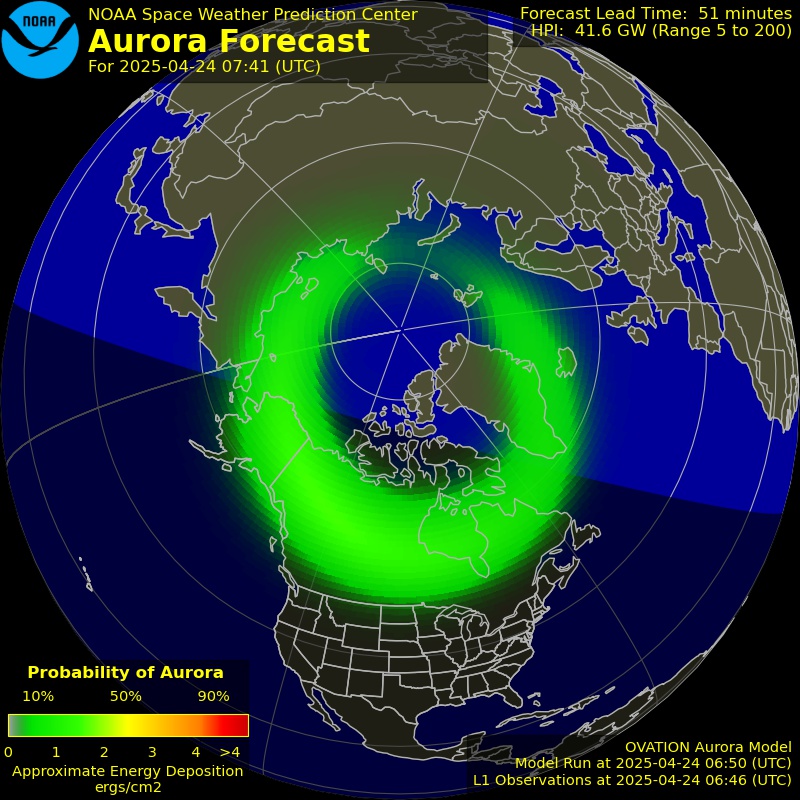
Source: NOAA Space Weather Prediction Center. NOAA publishes this product on its own cadence; use its displayed timestamp.
🌟 Where Aurora is Visible Right Now
Search a US location for its planning context. Check source timestamps and local weather close to your viewing time.
What is the KP Index?
The KP index measures geomagnetic activity on a scale from 0 to 9. Higher KP means stronger aurora that can be seen further south from the magnetic poles.
KP 0-2: Weak activity — visible only in far north (Barrow, Kaktovik)
KP 3-5: Moderate — visible in Alaska and the far north (Fairbanks, Anchorage, Nome)
KP 6-7: Strong — visible across northern states (Duluth, Fargo, Spokane)
KP 8-9: Extreme — visible across much of the US (rare events)
Important: We factor in more than just KP — cloud cover, moon phase, and darkness all affect visibility. Even with high KP, you won't see aurora if clouds block the sky or during full moon.
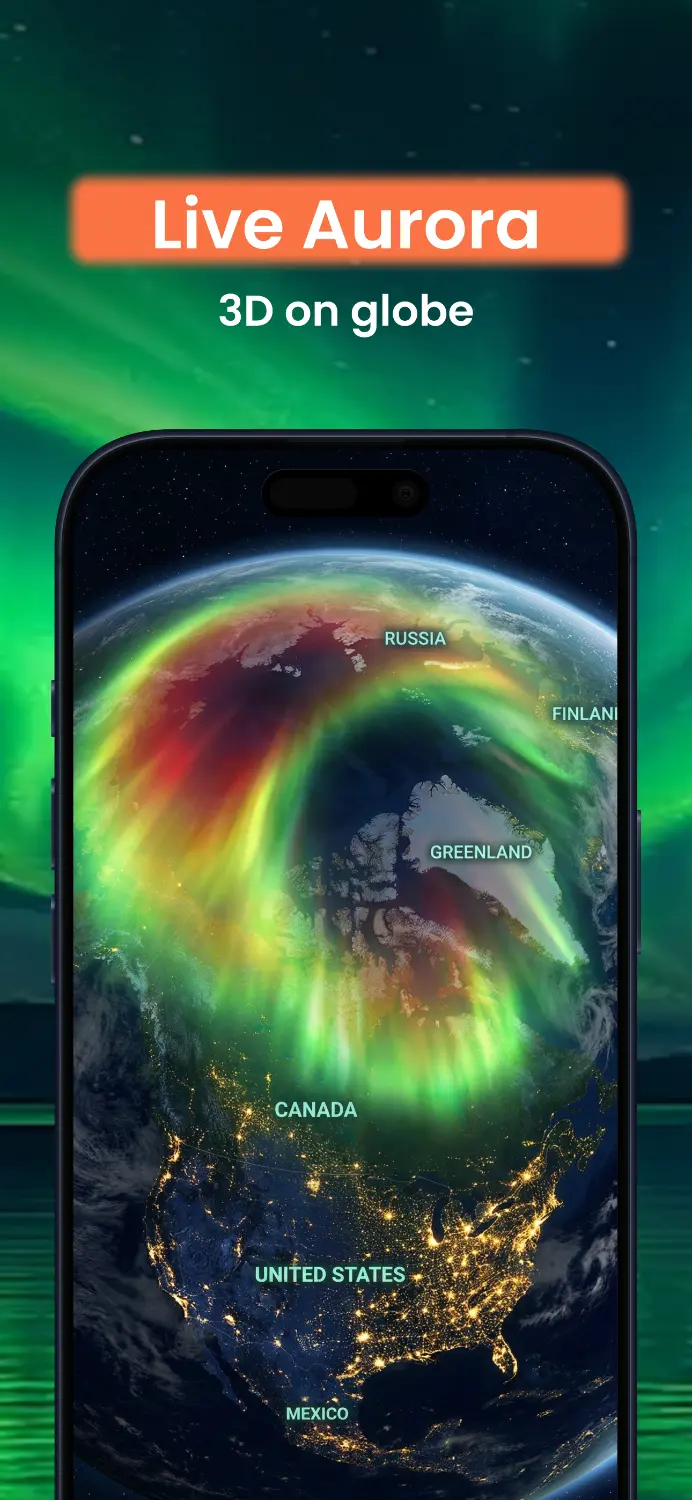
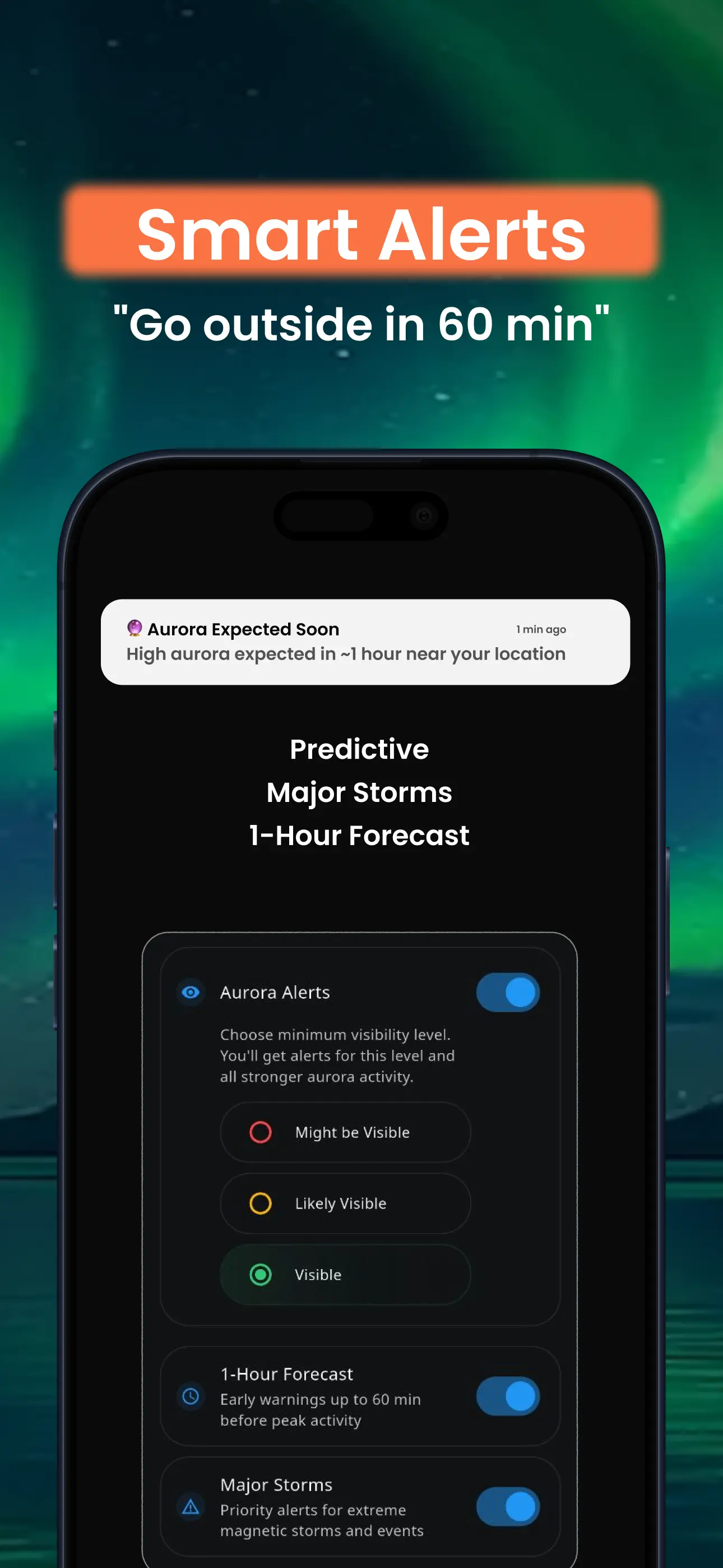
Get Alerted Before Aurora Appears
Aurora alerts, cloud cover, and forecast context for your location. Check current conditions before viewing.
- Current geomagnetic and weather context
- Push Alerts
- Live Aurora Map
- Cloud Cover Forecast

Frequently Asked Questions
What KP index do I need to see aurora?
Required Kp depends on magnetic latitude and is an estimate, not a guarantee. Use the threshold on your city page with current geomagnetic and sky conditions.
How accurate is the KP forecast?
Short-term forecasts generally have lower uncertainty than multi-day outlooks. Conditions can still change quickly, so check the latest NOAA map and local cloud forecast before viewing.
Why can’t I see aurora despite high KP?
Clouds, moonlight, daylight, light pollution, and a blocked horizon can prevent a sighting even during elevated geomagnetic activity.

