Unlikely
Best chance in Virginia: Richmond
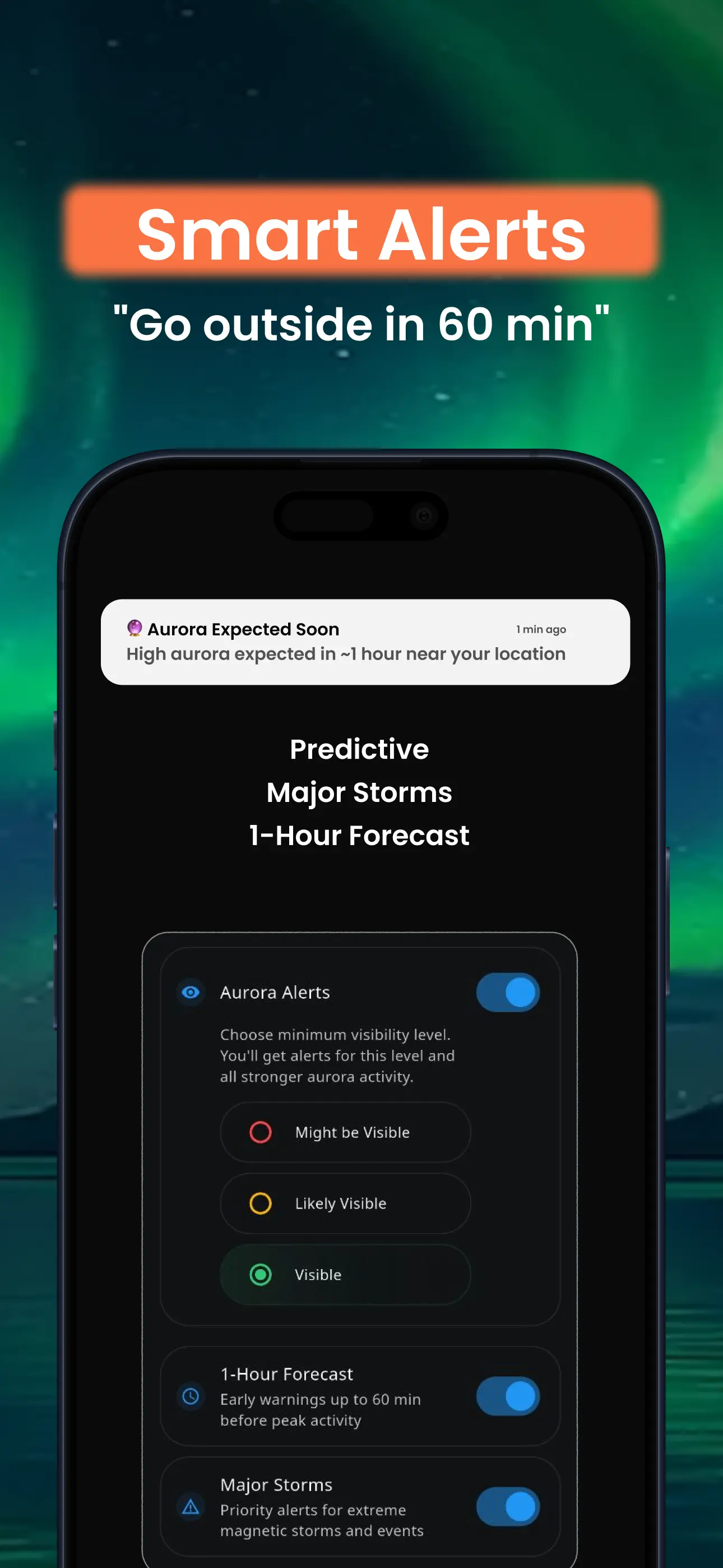
Free push alerts built on NOAA space weather data, plus the 72-hour forecast, cloud cover and darkness window for Richmond.
Northern lights in Virginia are rare: they need a geomagnetic storm at Kp 9, the top of the scale, to reach this far south. AuroraMe tracks 2 locations across Virginia, all at Kp 9; Richmond has the highest magnetic latitude.
Cities Covered
2
Monitoring locations across Virginia
Magnetic Latitude Range
46.2°–46.9° MLAT
Prime aurora viewing latitudes
Required Kp Index
Kp 9.0–9.0
Minimum activity for visibility
Kp Requirements by Location
Richmond
46.9° MLAT
Required Kp Levels
Kp 9.0+ Horizon
Kp 9.0+ Optimal
Kp 9.0+ Bright
Kp0Kp1Kp2Kp3Kp4Kp5Kp6Kp7Kp8Kp9
Visible on horizon
Clearly visible
Bright overhead
Virginia Beach
46.2° MLAT
Required Kp Levels
Kp 9.0+ Horizon
Kp 9.0+ Optimal
Kp 9.0+ Bright
Kp0Kp1Kp2Kp3Kp4Kp5Kp6Kp7Kp8Kp9
Visible on horizon
Clearly visible
Bright overhead
Visible on horizon
Clearly visible
Bright overhead
Aurora Status by City
Richmond
Occasional aurora viewing at 46.9° magnetic latitude. Strong geomagnetic storms (KP 8+) can push northern lights south to this location.
CURRENT STATUS
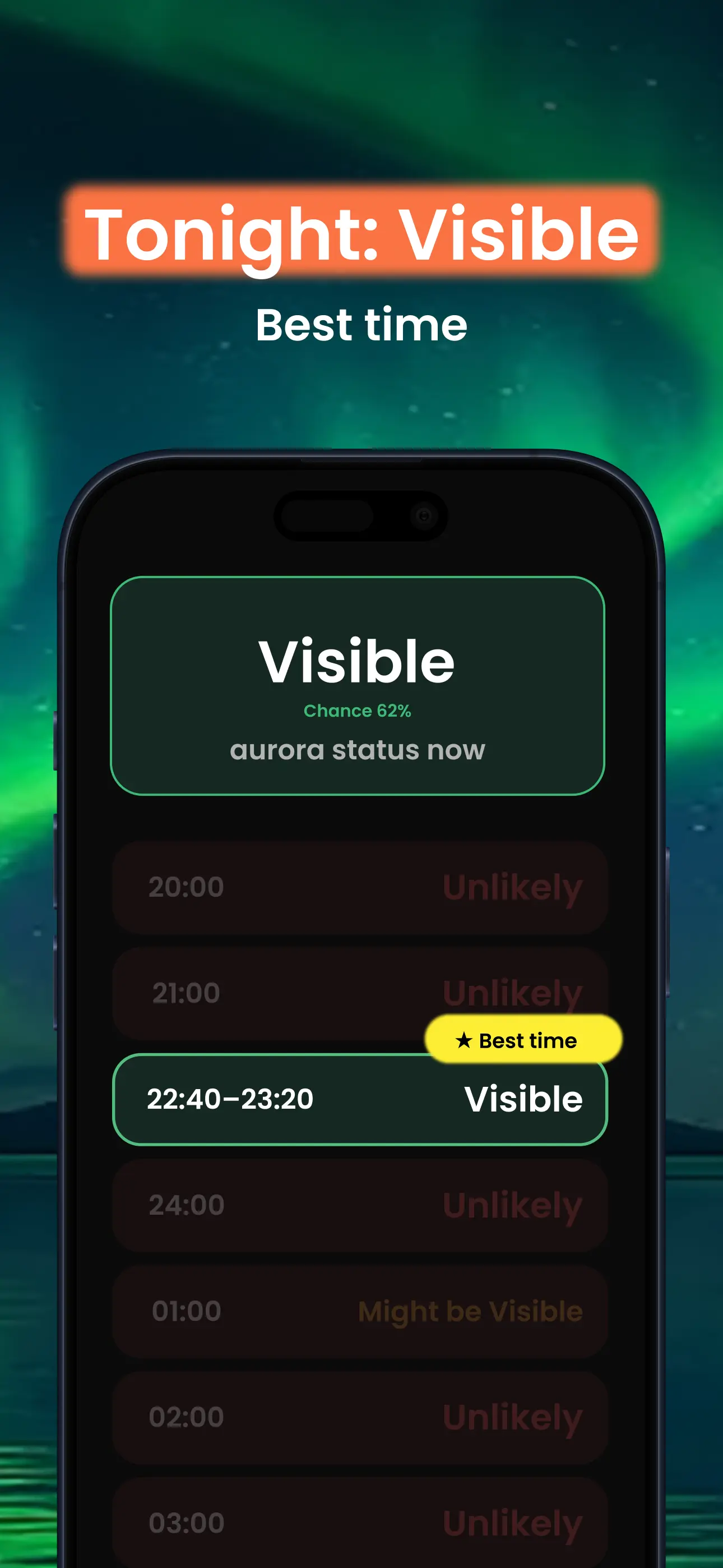
Unlikely
View
Virginia Beach
Occasional aurora viewing at 46.2° magnetic latitude. Strong geomagnetic storms (KP 8+) can push northern lights south to this location.
CURRENT STATUS
Unlikely
View
Best Viewing Season in Virginia
In a typical year no location we track in Virginia records a single clear night with Kp at its threshold. Only an extreme geomagnetic storm brings aurora this far south. Kp last reached the local threshold on 2003-10-29. Figures below are for Richmond, the best-placed of the 2 locations we track in Virginia. They describe a typical year built from the 1996-2026 planetary Kp record and the 2001-2020 cloud normal — not a forecast. Each city page shows tonight's live cloud, moon and darkness instead.
Geographic Advantages
Magnetic Latitude 46.2°–46.9° MLAT
Cities Covered 2 locations
Winter Darkness 11.3 h in December
Dark Sky Sites 0 Bortle 1-3
What It Would Take
Clear Nights a Year Under 1 a year
Kp Needed Kp 9+
Last Kp Threshold 2003-10-29
Oval Position (model) 24.0° above the northern horizon
Track with AuroraMe
Coverage All 2 cities
Advance Notice 30 minutes
Weather Integration Cloud cover
Predictions Best viewing times
That oval line is a model estimate of where the aurora sits at extreme Kp, not a measurement — the threshold date above comes from the Kp record itself.
Frequently Asked Questions
Can you see the northern lights in Virginia?
No — not in a typical year. Virginia averages under one clear night with the aurora in reach, and the planetary index has to reach Kp 9+ for it to be visible at all, which last happened on 2003-10-29. Only an extreme geomagnetic storm brings the aurora this far south, so this is a watch-the-alerts situation rather than a month to plan around.
Where are the darkest skies in Virginia?
Check our city pages for specific dark sky recommendations near each location.